What makes a surgical guide accurate
Guide accuracy comes from the data set and the seating, not from the printer. Here is what we check before printing.
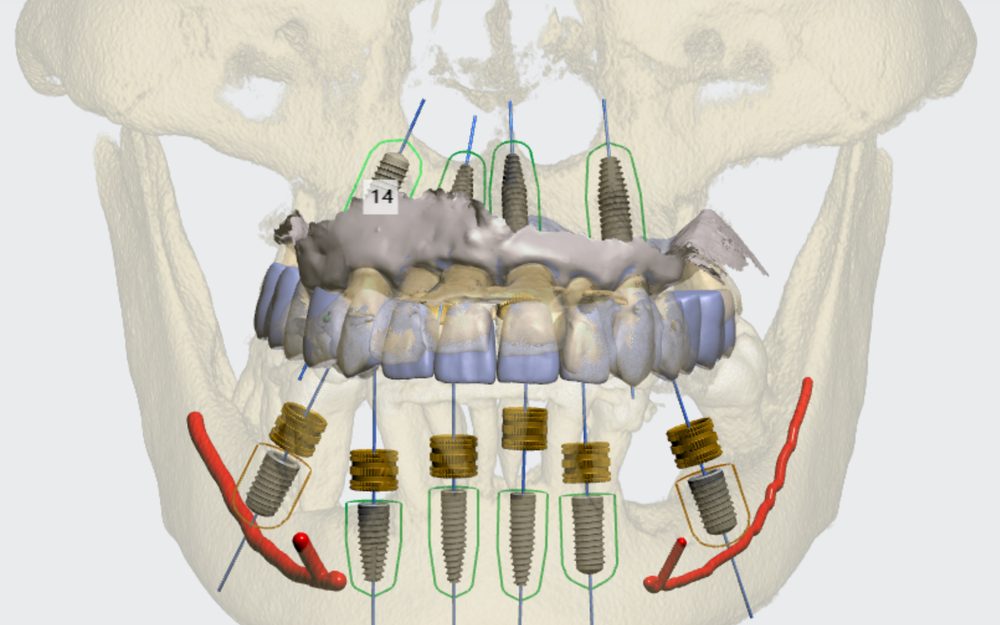
Data alignment
The CBCT and the intraoral scan must be aligned on at least three unambiguous points. Metal artefacts, a movable tissue or a scan taken with the mouth open will all reduce the alignment accuracy, and the guide inherits that error.
Support surface
Tooth support is the most accurate; mucosa support needs inspection windows; bone support needs fixation pins. Choosing the wrong support for the anatomy is more damaging than a small design error.
Sleeve and drill compatibility
The sleeve must match the drill kit the clinician will use. We ask for the kit reference, not just the implant brand, because the same implant system can be placed with different guided kits.
Verification on the model
Every guide is seated on the printed model before dispatch, and the sleeve position is checked against the plan. The surgical report lists the sequence so the clinician does not have to infer it.