Choosing the right occlusal splint
Stabilisation, repositioning, pivot and NTI appliances solve different problems. Using the wrong one delays the diagnosis.
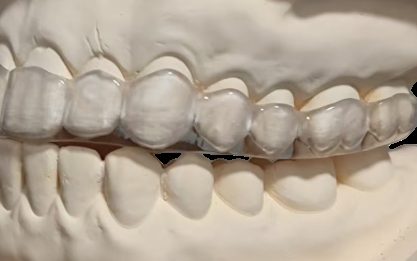
Stabilisation first
For most patients with bruxism or myofascial pain, a flat-plane stabilisation splint is the first appliance: it removes interference and gives a stable starting point. If the symptoms do not change, that is diagnostic information.
Repositioning is a treatment, not a test
A repositioning splint moves the mandible to a therapeutic position recorded with a facebow or digital tracking. It is used when a disc displacement needs to be reduced, and it requires a sequence of appliances as the position changes.
Pivot and NTI have narrow indications
The pivot unloads the joint for a defined short period; the NTI reduces clenching force with a single anterior stop. Neither is a long-term appliance, and both need a plan for what happens after.
Common questions
How long should a patient wear a stabilisation splint?
Night-time wear is typical, with review at four to six weeks. The splint is a diagnostic and protective device, not a cure on its own.
Can a splint be adjusted in the laboratory?
Minor adjustments are possible if the design file is retained; major changes require a new appliance.